
Leasing Options Make the Adroit PMK the Most Flexible Site Monitoring in Cost and Function
Construction companies wanting real-time environmental monitoring without the cost of buying and looking after their own equipment, are increasingly turning to leasing. And Adroit’s Portable Monitoring Kit (PMK) is leading the way as the flexible solution.
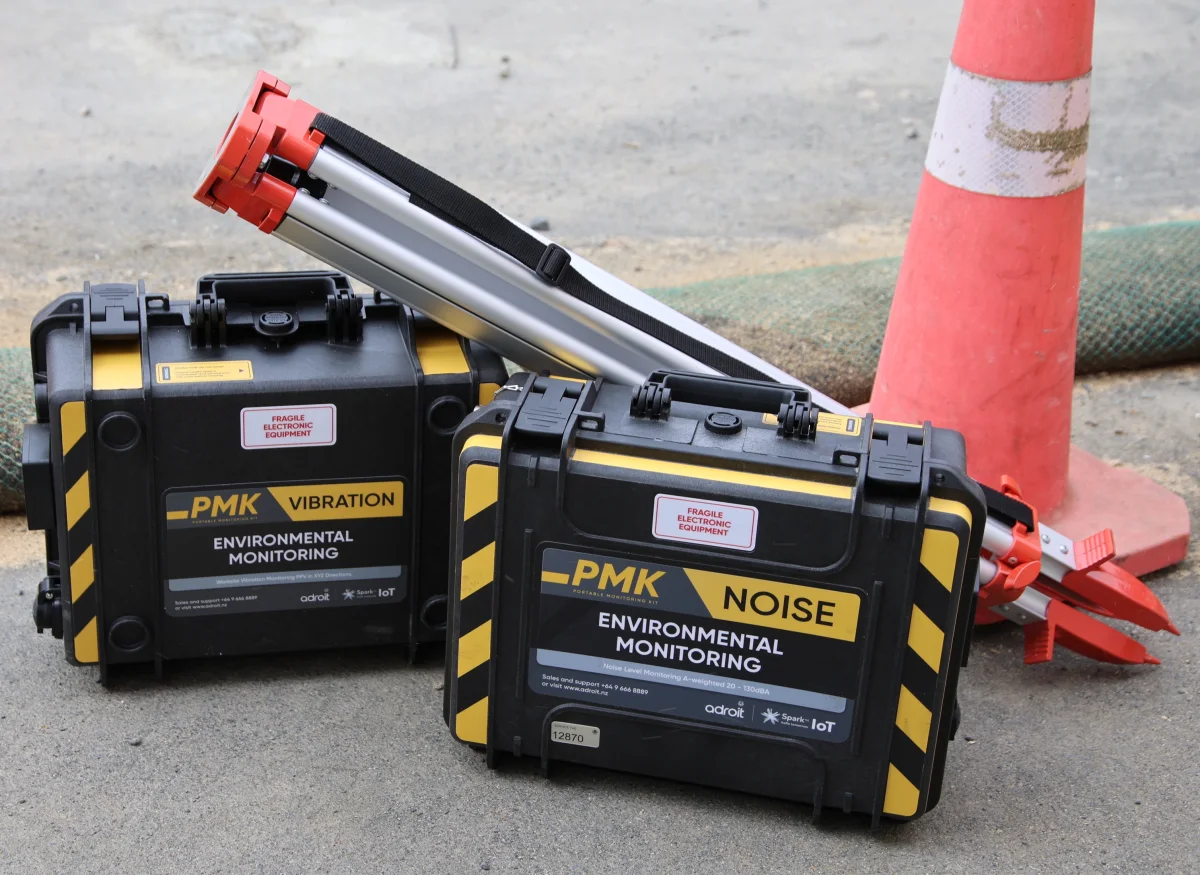
The PMK range covers dust, noise and vibration, and can be leased for anything from a few weeks to more than a year, purchased outright, or a mix of both. Because each kit is battery-powered, self-contained and connected to the cloud, it can go wherever the work is.
Adroit General Manager Guy Macpherson says leasing has changed who can access the technology.
“Leasing opens the door for many other businesses and projects that need a proven solution for a limited time,” he says.
Leases come with a small set-up cost and monthly charges based on the term, and Macpherson says project managers can often approve the cost as part of their operational budget, rather than going through a capital purchase. The cost can be priced into a tender, and when the job is finished, the kits go back.
So why lease rather than buy?
Leasing opens the door for many other businesses and projects that need a proven solution for a limited time
For CMP Construction, which has worked with Adroit for about four years and leases PMKs for its sites, the answer is simple.
“Ideally we don’t want to be a company that has a whole bunch of electronic bits and pieces. We’re a construction company,” says CMP Commercial Manager Andrew Moore. “You’ve then got to store it, you’ve got to maintain it, you’ve got to service these tools. And to be honest, we’ve got better things to do.
“So our preference would ideally be to lease them and have them looked after and maintained by a supplier, more so than buying it ourselves and then having a bloody big plant yard that we’ve got to then take care of.”
Leasing also lets contractors scale up when a job demands it. On its Ponsonby Road development, NZ Strong is using PMKs it bought for earlier projects alongside additional leased units to cover the extra monitoring the site requires.
But for businesses with a steady programme of work, buying can make more sense. Winstone Aggregates started with one PMK and has since purchased another four.
“To get people to come and do the testing for me all the time was really, really expensive and time consuming as well,” says Anya Hardy, Health and Safety Manager at Winstone Aggregates.
“Whereas with the PMKs I can try things, and if it didn’t work today, I can make some changes and go and do it again tomorrow. And of course, it gives me live data so I can put the PMK anywhere in any quarry and I can sit in my office and have a look at it.”
Ideally we don’t want to be a company that has a whole bunch of electronic bits and pieces. We’re a construction company
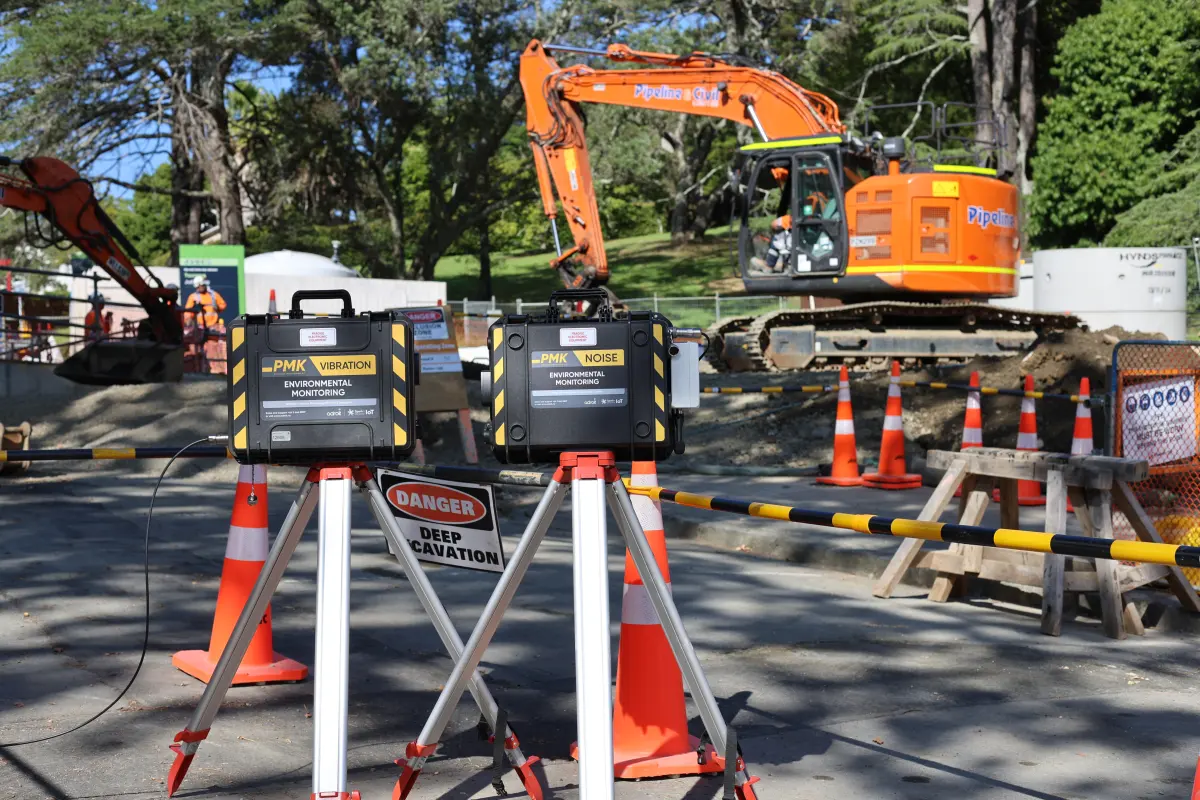
Another infrastructure company, Pipeline & Civil, bought PMK noise and vibration kits for its Judges Bay sewer project for Watercare, and has continued to use them on jobs since. “It allows us when we’re pricing jobs to say ‘we’re going to do this monitoring ourselves’,” says Site Engineer Liam Thornton.
Either way, Adroit offers a managed or self-managed service.
Built to move with the job
The PMK was born on the Christchurch Cathedral rebuild, where workers needed dust monitoring inside an unstable building. There was no mains power and too little light for solar, and falling debris ruled out fixed installations.
A client came to Adroit needing to monitor dust inside the building. “At that point we just had fixed units, so this is where we created a portable kit that could be taken in with them,” Macpherson says.
Other contractors soon showed interest, and the range has since grown to include noise and vibration kits built on the same principles.
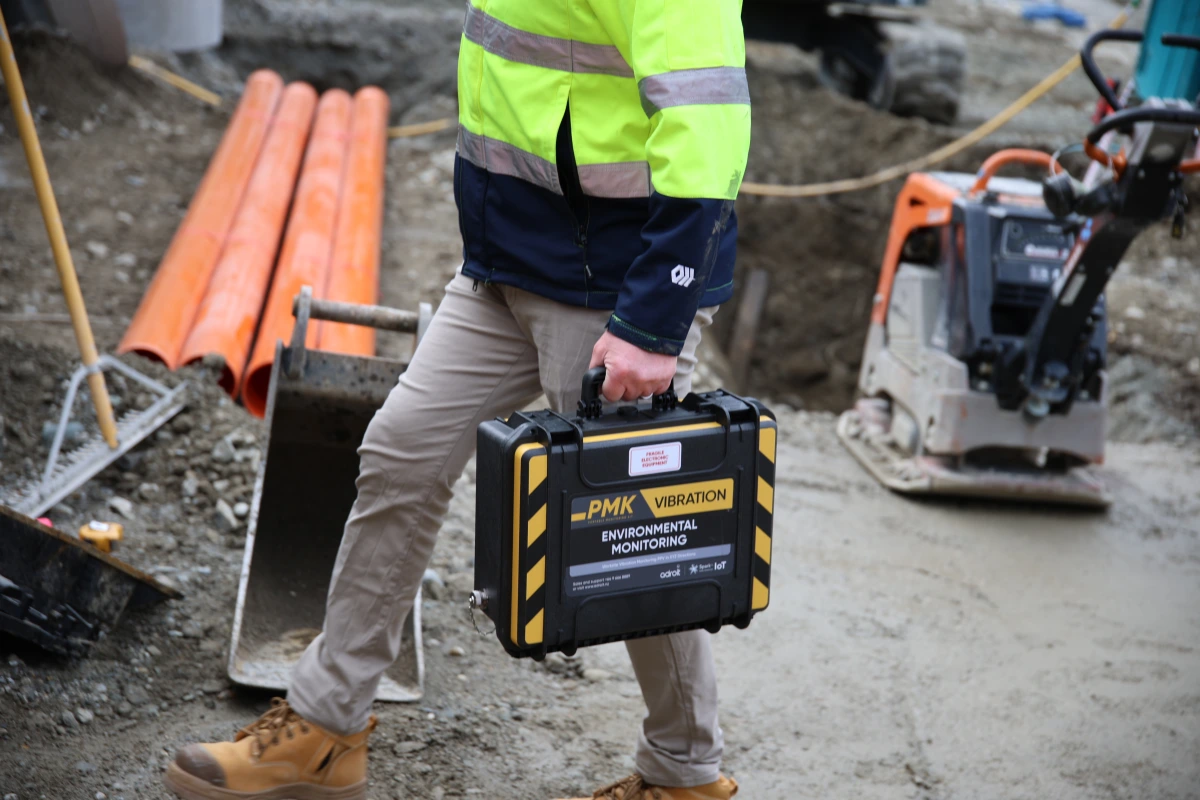
Each kit weighs approx 5kg, with its sensor, battery and communications housed in a rugged IP67-rated case. The dust kit runs for up to ten days on a single charge and can also run on mains power. It mounts on a standard tripod, a wall or a post, and with Adroit’s portable base stand and solar panel, a PMK can stay in place for long periods without mains power. Where solar isn’t practical, the kit is just as easy to bring back to base for charging and take out to site again.
Macpherson says the kits were designed to be thrown in a ute, taken back to the site office and set up again the next day.
“It needed to be easy to use for everybody on site. Otherwise it becomes a piece of technology that just gets left in the site office.”
Actions based on real-time data
Readings are uploaded to the Adroit platform every 15 minutes over Spark’s Cat-M1 network, where teams can view them remotely and set thresholds and alerts. That means project teams can act while the work is underway, rather than explaining results after the event.
“The Adroit real-time data is awesome, as you can log in at any time and see how your work may be affecting air quality,” says Jen Dransfield, Health & Safety Advisor for Naylor Love Canterbury.
And it’s the same for vibration. “We’ve got clients using this when they’re piling, and they’re actually able to get the data in near real time and go, ‘Look, we’re approaching the threshold. Let’s change our methodology and pile a different way and bring it back down again,’” says Macpherson.
The Adroit real-time data is awesome, as you can log in at any time and see how your work may be affecting air quality
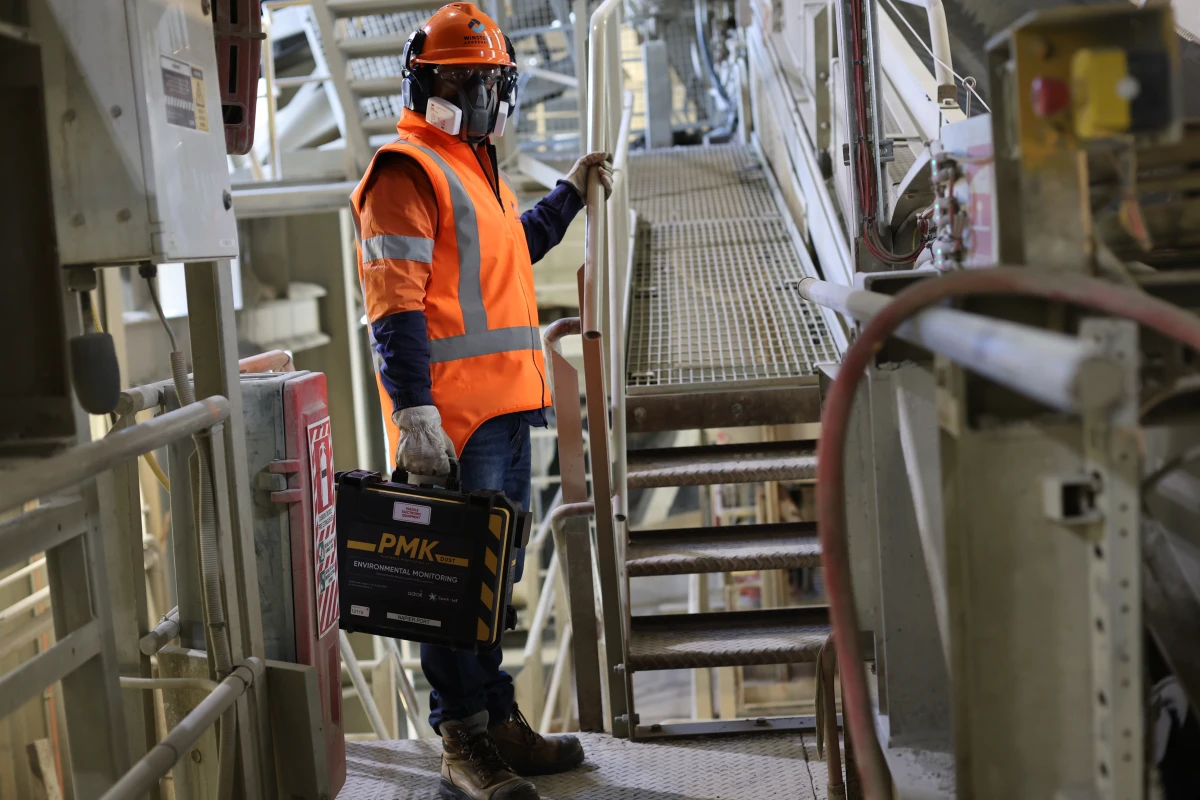
At Winstone Aggregates, PMKs have been placed in loader cabins, offices and control rooms to track how dust gets in and which tasks are responsible.
“So, honestly, I think they are great. This is the best toy that I’ve got,” says Hardy.
For CMP, the data has also proved its worth when neighbours complain. Moore says the company has been able to show council officers that background traffic noise was louder than its construction work.
“It’s quite handy having electronic data and it’s very hard to disprove,” he says.
Macpherson says that is the point of offering both leasing and purchase. “Depending on your project, it just makes things easy.”
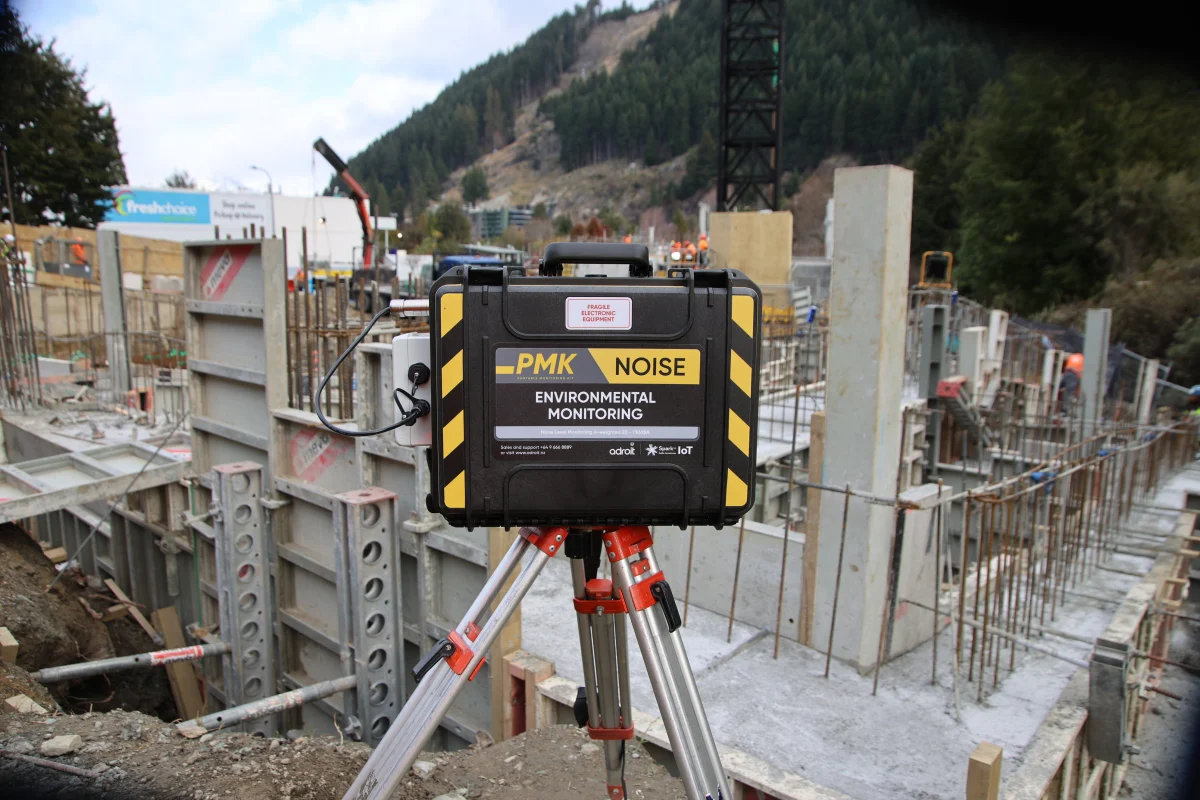
The Adroit PMK range
All three kits share the same rugged 5.4kg IP67 case, connect automatically over Spark’s Cat-M1 network and can run on battery, mains or solar power. Each comes with customisable thresholds and alerts, downloadable data and APIs for integration, and can be leased or bought.
- Adroit PMK Dust: continuously measures PM1, PM2.5 and PM10 particulates, with up to 1 week of battery life.
- Adroit PMK Noise: continuously measures worksite noise in decibels (dB), with up to 2 weeks battery life.
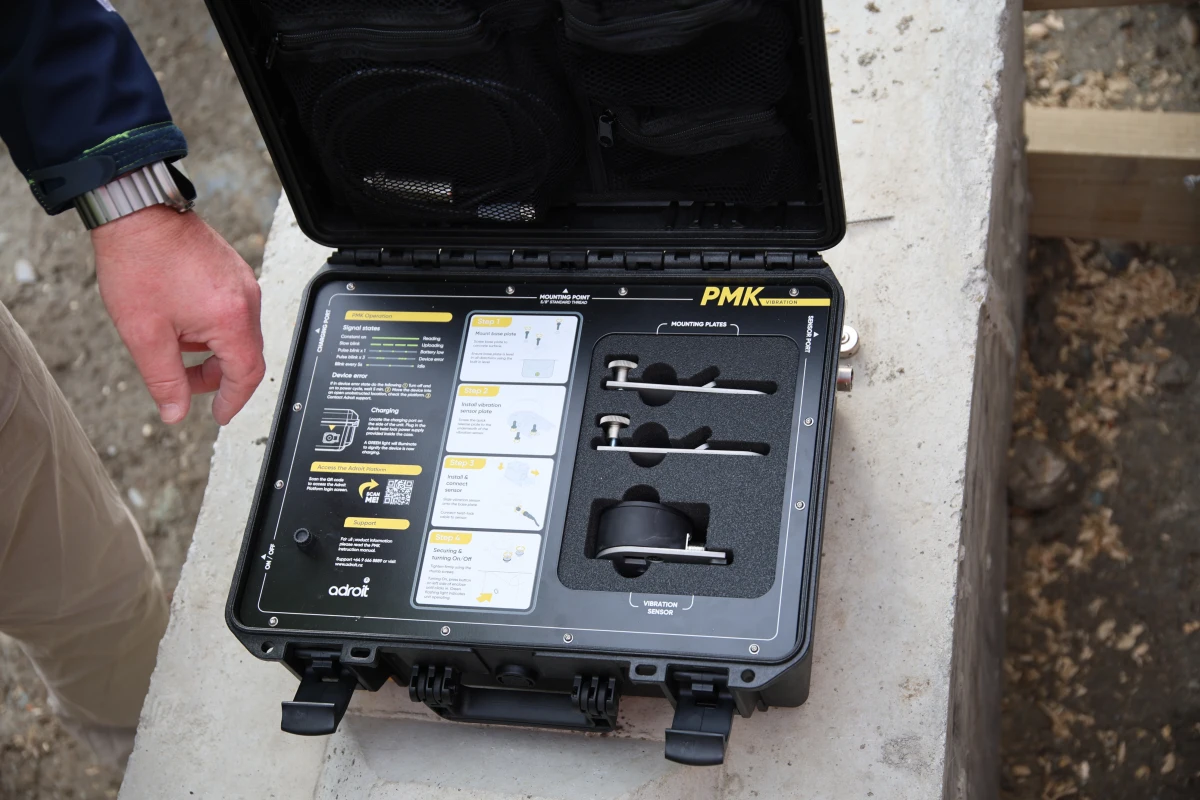
- Adroit PMK Vibration: measures peak particle velocity on three axes and is verified to the DIN 4150-3 standard, with up to 4 weeks battery life. Detachable quick-release sensor plates make it easy to move between sites.
For more information, see: adroit.nz/portable-monitoring