
Live Data Changes the Equation for NZTA on SH1
A 30km/h traffic speed restriction looked inevitable during strengthening of the Kaiapoi River Bridge. Viotel monitoring helped the project team find a way to keep traffic moving at 80km/h while managing risk to fresh concrete.
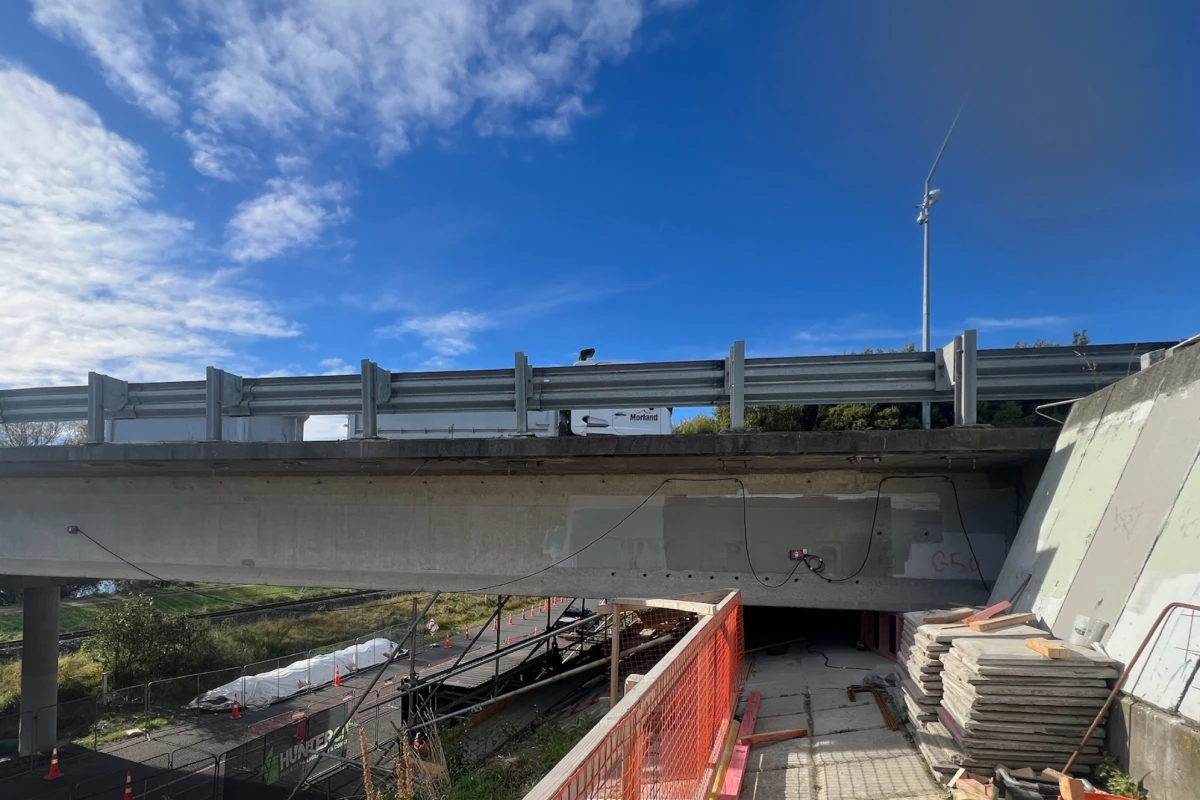
Strengthening work on the Kaiapoi River Bridge presented the project team with a difficult balance.
As part of the early works for the NZ Transport Agency Waka Kotahi (NZTA) SH1 Belfast to Pegasus Motorway and Woodend Bypass, Hunter Civil needed to cast new shear blocks onto the beams of the existing bridge.
Shear blocks provide a load path from the beams into the bridge abutments, and bond strength is critical. Hunter Civil needed to pour new concrete around the existing beams to form the blocks, then manage vibration from passing traffic while that concrete cured and gained strength.
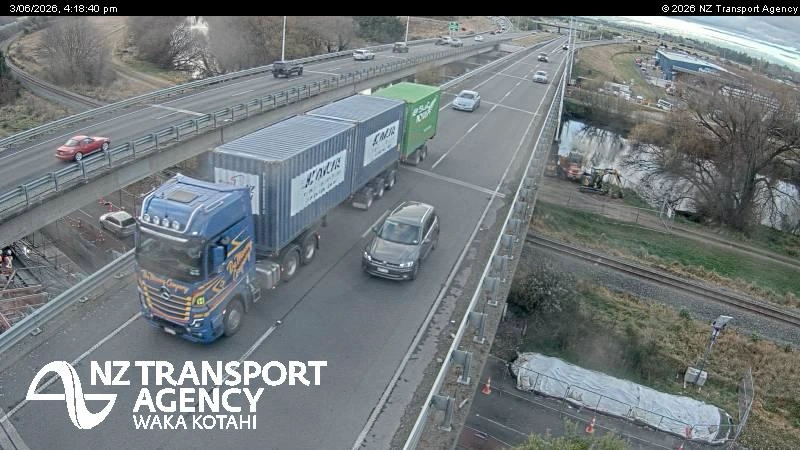
Ordinarily, the simplest way to remove that risk would be to close the bridge during the pour and for several days afterwards. On this busy section of SH1 north of Christchurch, with a combined AADT of approx. 30-35,000 vehicles/day, that was not an option.
The conservative engineering response was therefore to reduce traffic from 100km/h to 30km/h during the pours and keep that restriction in place for at least three days, or until the concrete reached 15MPa. That would have created significant disruption.
The alternative was to measure the vibration the bridge was actually experiencing and use that evidence to determine what temporary speed limit was actually required.
The conservative engineering response was therefore to reduce traffic from 100km/h to 30km/h during the pours
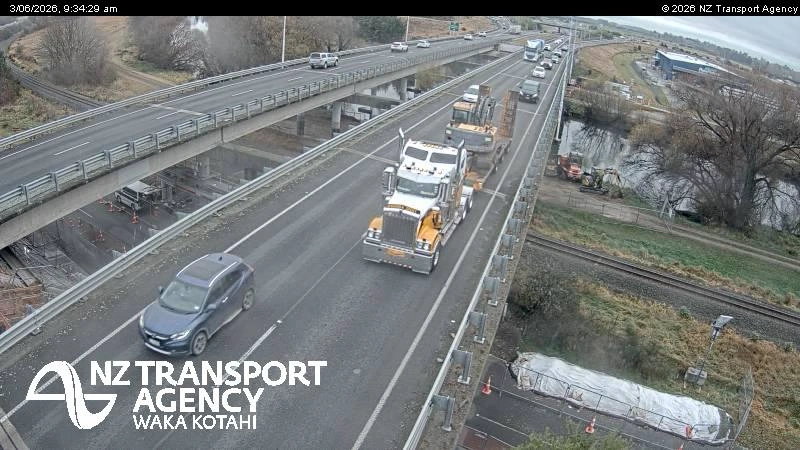
Hunter Civil approached Adroit about vibration monitoring. As the project requirements became clearer, Adroit General Manager Guy Macpherson recognised that the work called for specialist structural monitoring expertise. Viotel had recently joined Adroit’s technology portfolio, and Macpherson saw a fit.
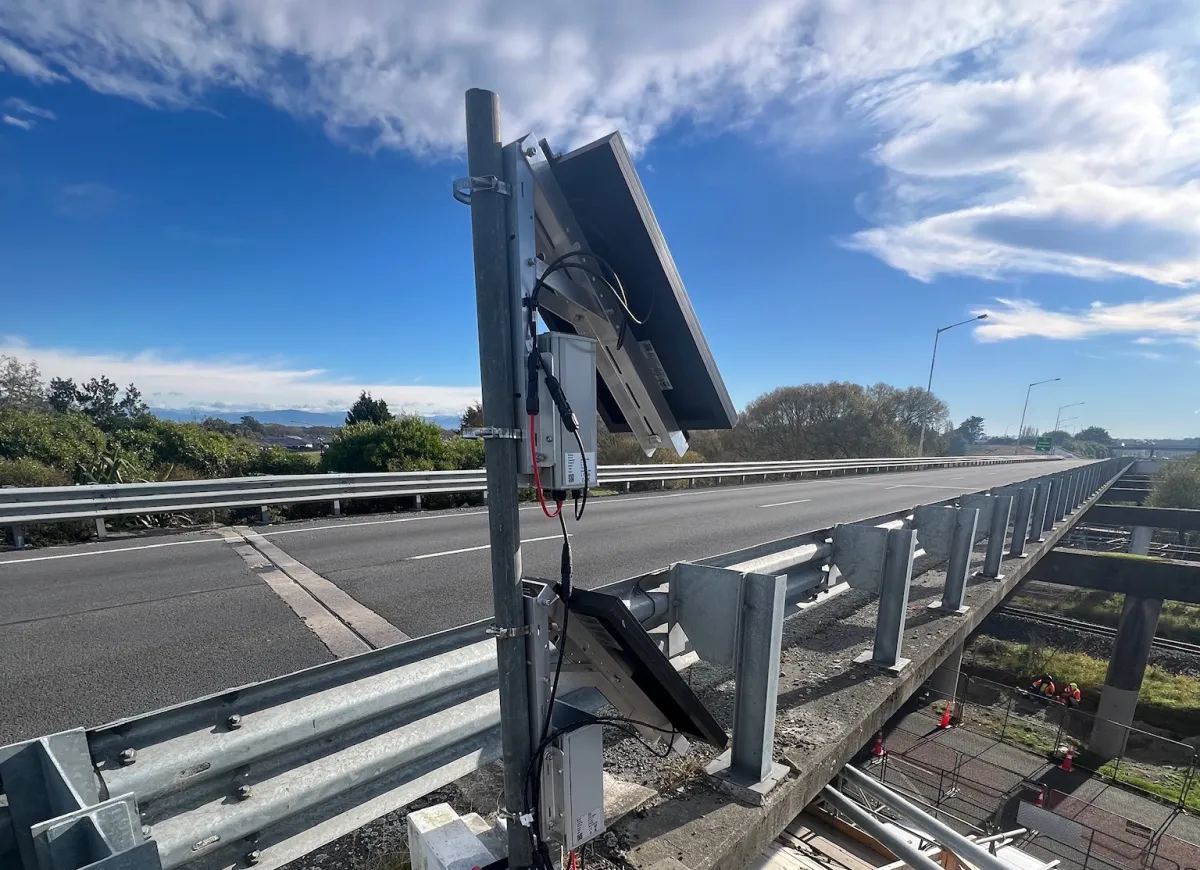
Adroit brought Viotel into direct discussions with the project team, and eight Viotel accelerometers were installed across the bridge to measure its response to live traffic.
The result was a very different traffic-management plan: an 80km/h temporary speed limit, with the main concrete pours timed to take advantage of lower weekend traffic volumes.
Reaching that point relied on more than the sensors alone. The Viotel data was tested against Aurecon’s structural modelling, checked against physical measurements on site and combined with traffic data to inform the final decision.
Defining the Scope
For Hunter Civil Project Manager Patrick Connell, the Kaiapoi River Bridge project involved both engineering and contractual risk.
Hunter Civil had tendered and planned the work around the 30km/h requirement. So, if the project team decided traffic could move faster and vibration subsequently damaged the fresh concrete, there needed to be a sound basis for that decision.
“As professionals committed to the highest standards, we invest considerable time in planning the delivery of every project. Changes of this nature can have a substantial impact on a project and its stakeholders. It is therefore essential that we safeguard our company and all stakeholders by clearly understanding the liabilities and proactively address risks as they arise throughout the project," says Connell.
Rather than debate where the risk should sit, the project team proposed using Viotel cloud-connected accelerometers to measure bridge vibration under live traffic, with the results determining what speed restriction was actually required.
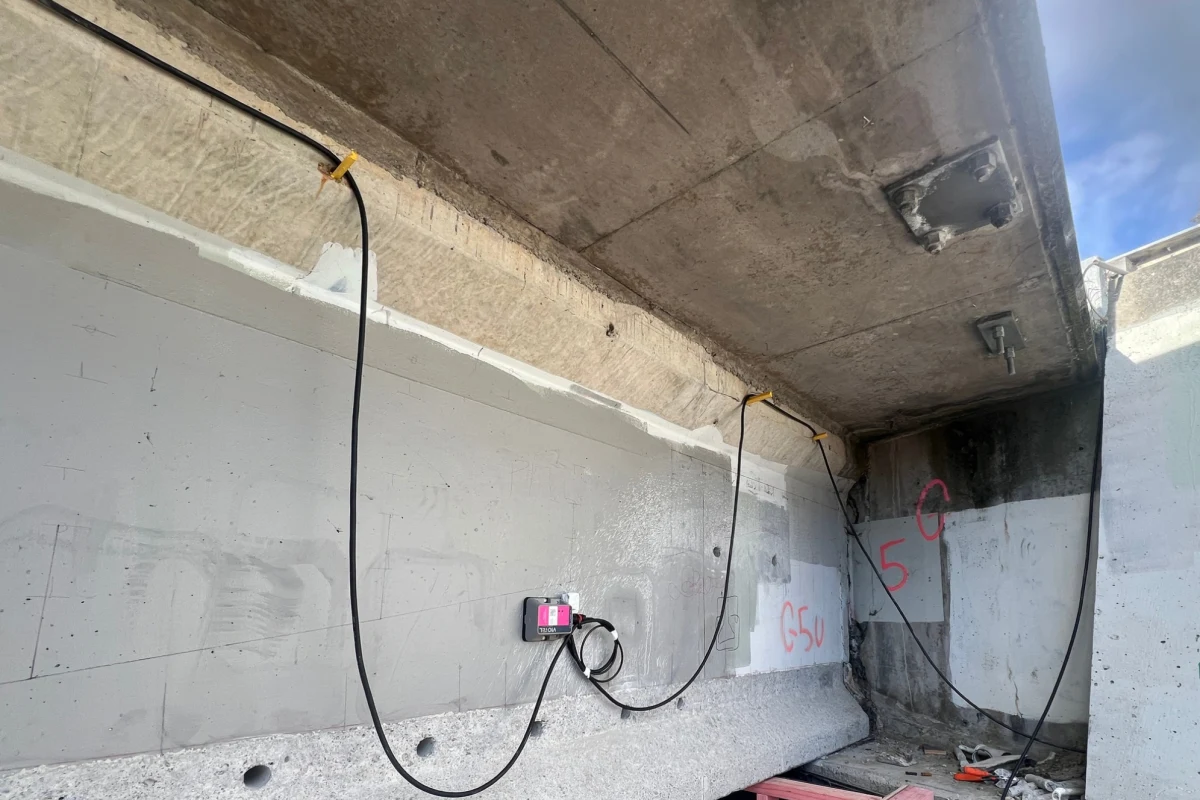
“We proposed vibration monitoring to the contract administrator and the client and they went, ‘That’s actually a way that we can all move forward with some confidence rather than it being an opinion or a guess,’” Connell says.
The first task was working out exactly what information the engineers needed.
“This didn’t start as a cleanly defined scope,” Connell says. “It was developed organically by actually getting together, having a conversation with both the Adroit team, Viotel and the project team so everyone understands what we’re actually trying to achieve here.
“The Adroit and Viotel team were fantastic in terms of taking the problem and building that into a scope, then gathering the right information so that we’re able to make some decisions,” he says.
Macpherson says the initial discussion brought the project’s engineers and consultants together with Adroit and Viotel to establish what the monitoring needed to show.
“Before you just say, ‘We’ve got the right technology,’ you really need to make sure you can answer the problems they’re trying to answer,” he says.
For Macpherson, the project illustrates Adroit’s role in selecting technology and making it work on site.
“What we’re good at doing is looking at what technology is available globally, assessing whether or not it’s right for an application, bringing it in-house, verifying that, but then actually looking at how to deploy it in the real world.”
That included bringing Viotel’s Global Lead Infrastructure Solutions, Joshua Seskis, into direct discussions with the engineers. A structural engineer with more than a decade’s experience in bridge asset management, Seskis helped shape the monitoring approach and interpret the results.
Adroit coordinated the local deployment, working with Viotel to secure equipment at short notice and sending a technician south to complete the installation with Hunter Civil.
Seskis says his starting point is the engineering question.
“Let’s start with the risk management problem you’re actually running,” he says. “What are you trying to control here? If that’s what you’re trying to control, then this piece of technology gets you to this point.”
Before you just say, ‘We’ve got the right technology,’ you really need to make sure you can answer the problems they’re trying to answer
How the Viotel monitoring works
Structural vibration monitoring is well established, but traditionally it would mean days on site installing separate instruments and cabling, followed by weeks processing the resulting data. Viotel was designed to collapse that process: mount the compact, self-contained cellular accelerometer to the structure, connect it, and within minutes processed structural data is appearing on the dashboard.
At its core is a low-noise MEMS triaxial accelerometer, measuring acceleration across three axes. For the Kaiapoi project, the key measure was velocity: how quickly the beam was moving as traffic passed over it.
Viotel processes the accelerometer data in five-minute windows using a Fast Fourier Transform, or FFT, to calculate the velocities recorded during that period. The dashboard presents maximum events in a form the project team can use immediately, while retaining the original data so engineers can drill into individual events when something does not look right.
That ability to move from the headline result into the underlying data became important as the project progressed.
“Our view is, it’s your data,” Seskis says. “We don’t gatekeep it. But, if someone goes, ‘How do I interpret this data?’ I’ll sit down with them and explain, because it’s valuable for people that understand and use it.”
Testing the data
For Aurecon, Lead Structural Bridge Engineer, Matthew Montgomery, the monitoring provided a way to test Aurecon’s theoretical model against the bridge itself.
That matters on an existing structure. Engineers can calculate how a bridge should behave, but those calculations necessarily contain assumptions about its material properties, dimensions and condition.
“We largely have worked off just theoretical expectations on vibration analysis to predict what the vibration would look like and not actually directly monitor it,” Montgomery says.
“We’re assuming things like the stiffness of the concrete. The span length is just based on what our direct measurements are, rather than where it might actually be pivoting around. And then it’s also assuming that we’ve got homogeneous material throughout the concrete.
“There’s quite a lot of assumptions in there that we can’t really account for fully. So doing direct monitoring is a lot more reliable. We were just observing rather than predicting.”
Across the eight Viotel sensors on the Kaiapoi River Bridge, seven produced results that closely matched what Aurecon expected to see. The eighth suggested one beam was moving more than it should.
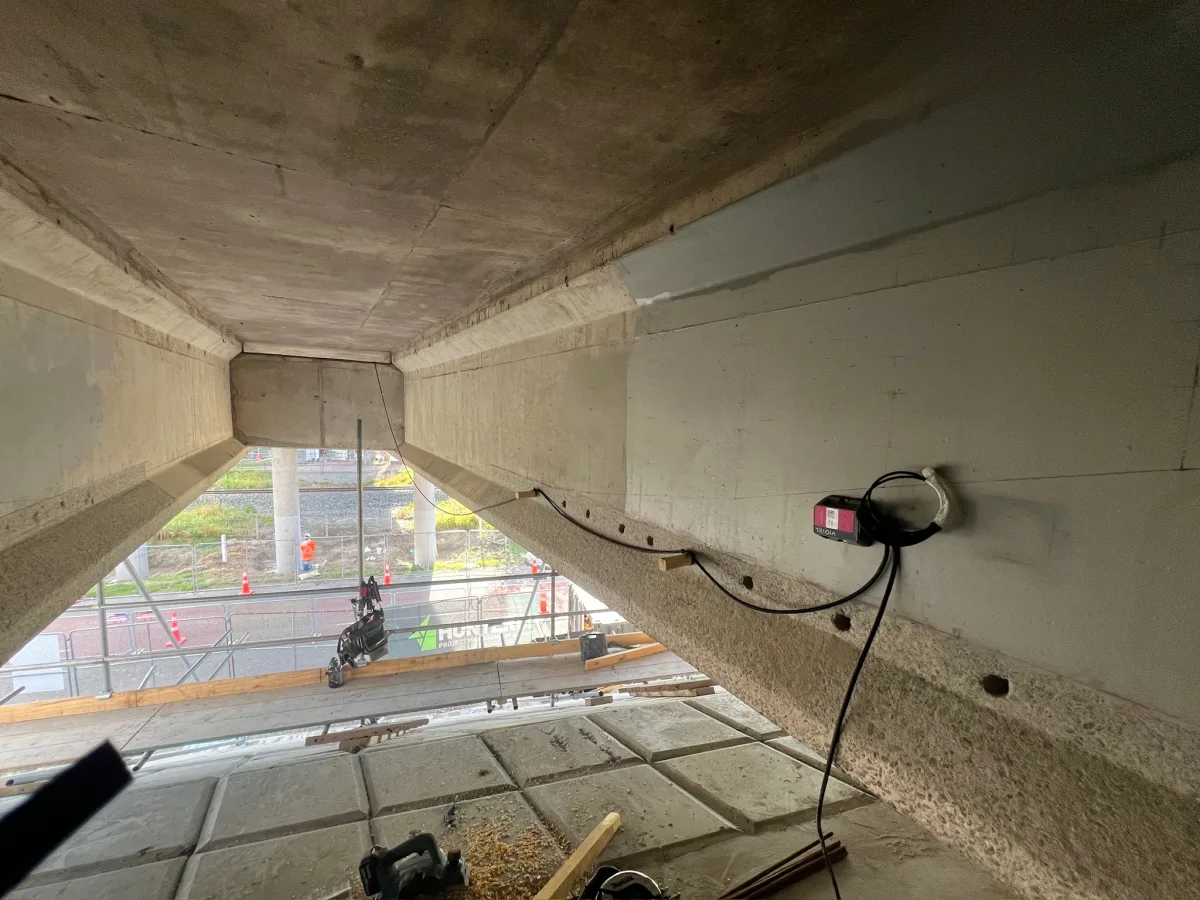
Doing direct monitoring is a lot more reliable. We were just observing rather than predicting.
“We had eight sensors on site and seven of them are showing it works exactly the way that our theory is saying,” Montgomery says. “And one of them is an outlier. We investigated the outlier just to make sure that it wasn’t picking up something that we didn’t expect.”
The reading was credible enough that it could not simply be dismissed. If the movement was real, it could point to a significant defect in the beam.
“We monitored how much deflection was happening at that point in the bridge with other methods,” Montgomery says. “And we also took videos just to see if we could observe that deflection happening.”
Hunter Civil added a decidedly low-tech check, setting up a caliper arrangement to manually measure the movement of the beam and compare it with the electronic monitoring.
“We actually had quite good correlation between something very low-tech and the very high-tech end of things too, which gave additional confidence in what the engineer was saying,” Connell says.
For Montgomery, that process was an important part of using the technology properly. Monitoring provides another source of evidence, but it still needs to be understood in the context of the structure.
“There’s a lot of risk mitigation that goes into making sure that we understand what’s going on and that we understand what our sensors are actually telling us,” he says.
“If we just blindly accept what the sensors are saying, we might end up in a situation where we’re saying something’s direly wrong with the bridge, but it’s just that there’s maybe a sensor that’s doing something we didn’t really expect it to do.”
The detailed analysis also picked up something else. One monitoring location was consistently experiencing higher vibration. Seskis went back through individual events, CCTV footage and the traffic passing over the bridge. His bridge-management background pointed him towards the road approach.
Settlement immediately before the transition onto the bridge meant heavy vehicles were hitting a change in level and creating a dynamic impact as they entered the structure.
“You basically get a slump in the ground and the trucks go up and you get this dynamic impact effect,” Seskis says. “It was clearly isolated to that section and it was clearly detectable.”
It was the kind of influence that can be difficult to capture neatly in a theoretical model but obvious once the measured response is connected back to what is happening on site.
“You had your sensor, you had a piece of evidence that doesn’t necessarily fit with the model of the bridge,” Seskis says. “You look at the structure itself and you go, well, this is why there’s a piece of deterioration there.”
And on a live project, he says, evidence matters. “Every time you say something, it costs someone money,” he says. “So to have some evidence there to support it, I think was a really good outcome.”
Macpherson says interpreting the results is central to Adroit’s work.
“It’s making sure that technology can be understood in the real world,” he says, “and actually provide the data they need to make real-world decisions.”
Setting the traffic controls
Once Aurecon had established how the bridge was responding to live traffic, the original 30km/h requirement could be revisited.
“We were predicting that we would need to drop the speed limit to 30 kilometres per hour to achieve what we wanted to,” Montgomery says. “Whereas with the monitoring in place, we justified keeping the speed up at 80 kilometres per hour. So a significant shift there.”
Montgomery says the results could potentially have supported a less restrictive approach again, but 80km/h provided a practical balance between traffic flow and the remaining engineering risk.
Viotel data was then combined with NZTA traffic data, including TomTom information, which showed lower traffic volumes on Saturdays and, importantly, fewer heavy vehicles crossing the bridge.
Armed with that information, Hunter Civil scheduled the two main concrete pours on successive Fridays. That placed the critical period around 15 to 25 hours after each pour into the quieter Saturday traffic window.
Connell says the value was in putting hard information behind observations that people on the project already understood intuitively.
“Everyone knows that there’s less traffic on a Saturday, but being able to put some numbers behind that and actually go, ‘Here is a definition around why’... that was the big thing. “Putting some science to observations that people had already made.”
Future use on existing bridges
The Kaiapoi work has changed how Montgomery thinks about structural monitoring on future bridge projects.
He says existing structures are particularly interesting because the bridge may have been carrying traffic for 40 or 50 years. And by then, concrete has aged, defects may have developed and real-world conditions are unlikely to match every assumption in the model.
“In terms of the amount of data we got and the use of that data in terms of showing certainty with the way the bridge is working, it was super helpful,” Montgomery says.
“It helped us verify an existing bridge and mitigate a lot of the assumptions that we were putting in there.”
It’s making sure that technology can be understood in the real world.
If a similar project came up again, he says monitoring would be considered much earlier.
“If we have another bridge that we are modifying in the future, it would definitely be something I’d recommend that we look at right away. Widening bridges is fairly common and it always comes down to vibration levels. It’ll be one of the first things I’ll think about the next time I’m on a widening project.”
NZTA purchased the monitoring equipment used at Kaiapoi.
Seskis sees the same technology having a role much further into the life of an asset.
He points to a bridge in Australia where Viotel instrumentation installed during construction was left in place for ongoing monitoring. When the asset owner later reviewed capital expenditure across its bridge portfolio, Seskis says the monitored bridge was the one structure where it had enough information to confidently consider deferring planned work, potentially by nine or ten years.
“There’s millions of dollars that have been saved through capital deferral,” he says.
That is increasingly relevant as road and rail authorities face the challenge of maintaining infrastructure built decades ago while deciding where limited renewal budgets need to go first.
As Seskis says: “It’s not the 50s. We’re not building everything again. We’re trying to manage the infrastructure we’ve already built.”
For existing bridges, that kind of measured evidence can turn a conservative assumption into a more precise engineering decision.
If we have another bridge that we are modifying in the future, it would definitely be something I’d recommend that we look at right away.