
From Compliance to Control: How CMP Uses Environmental Monitoring to Keep Construction Moving
On a major construction site, knowing what happened yesterday has value. Knowing what is happening now can change what happens next.
For CMP Construction, that distinction is changing the role environmental monitoring plays across its projects.
Established in Auckland in 1989, CMP has grown into one of New Zealand’s leading privately owned construction companies, specialising in large-scale apartment, commercial and industrial projects with values ranging from $10 million to $150 million. Its portfolio includes some of the country’s largest apartment developments, and the company now operates from offices in Auckland, Wellington and Queenstown.
Over the past four years, CMP has worked with Adroit to monitor environmental conditions including noise, dust, vibration and weather. What began primarily as a practical way of demonstrating compliance with resource consent conditions has increasingly become another source of live project information.
In Queenstown, where CMP is undertaking major earthworks and construction activity on two sites, Adroit monitoring is being used across different stages and types of construction. Adroit’s Portable Monitoring Kits (PMKs) give project teams the flexibility to follow the work: sensors can be placed wherever activity is closest to sensitive neighbours as excavation and construction move across the site.
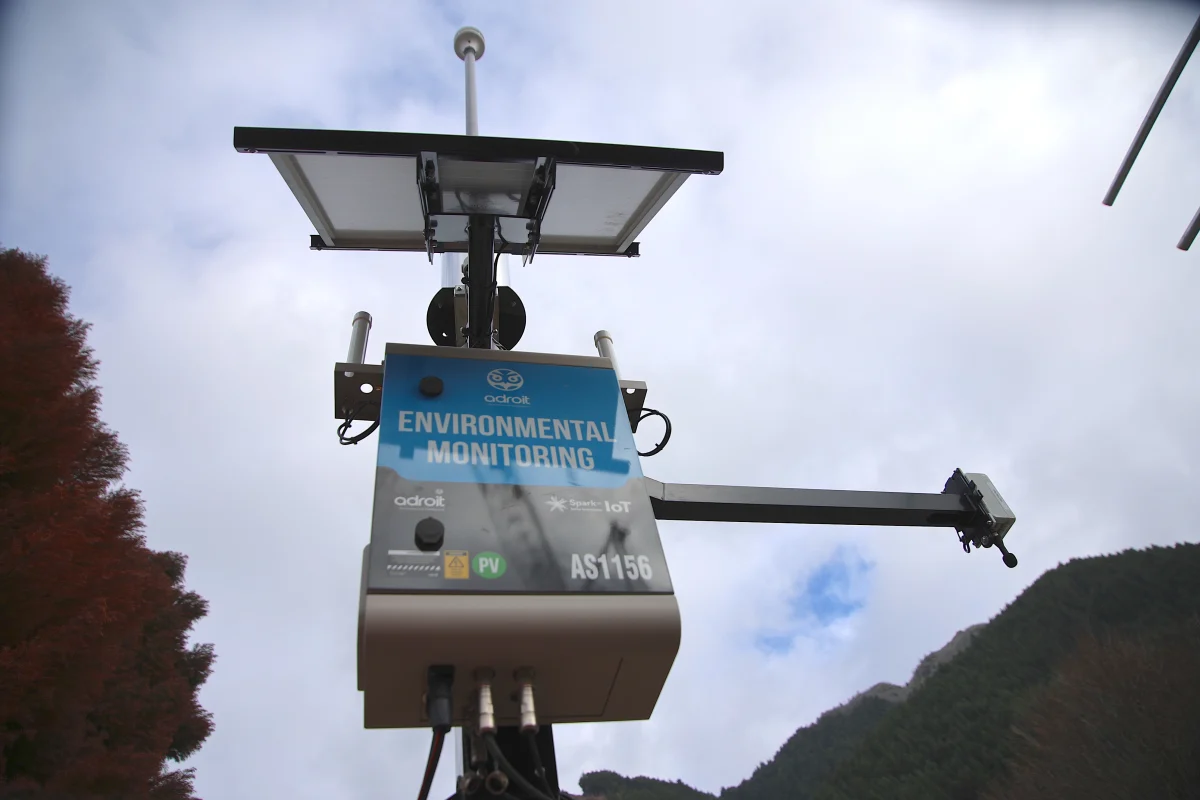
Fixed installations, positioned at the boundaries nearest affected neighbours, provide a continuous record of noise, vibration and weather for the life of the project.
CMP Site Engineer Theva Abishek says that matters on projects involving extensive excavation into schist, drilling, piling, concrete work and heavy construction activity.
“Noise and vibration are critical consent requirements and a key community relations priority,” he says.
“On a project of this scale, we needed complete visibility of noise and vibration impacts to ensure compliance and maintain a positive relationship with our neighbours.”
The difference is that the information isn’t sitting in a report waiting to be reviewed. CMP can see it while the work is happening.
Knowing What’s Happening Now
CMP Commercial Manager Andrew Moore says environmental monitoring starts with a straightforward obligation.
“Every project has conditions applied to it through the resource consent approval,” he says.
“We need to make sure that where a resource consent requires noise, dust or any other form of environmental monitoring, we can provide the data we need to show the council resource consent monitoring officers that we’re compliant.”
Traditionally, contractors could engage consultants to undertake periodic environmental monitoring. Increasingly, CMP has found value in having proven monitoring equipment continuously collecting data from the site itself. That creates a permanent record, but more importantly, it gives the project team information it can use.

In Queenstown, Abishek checks the Adroit data daily and receives automatic notifications when predetermined thresholds are reached. Critically, those alert thresholds are set below the consent limits themselves, so the team is warned while there is still room to act, rather than being told about a breach after it has occurred.
“We’ve set an alert level, so if it goes above that we get a notification,” he says.
“When it crosses that threshold, we’ll jump onto it and say, okay, we need to tone it down. Whoever the subcontractor is that’s causing it, we’ll talk to them and say, this is quite a sensitive area, so we need to be careful here.”
The potential sources are familiar to anyone working on a major construction project.
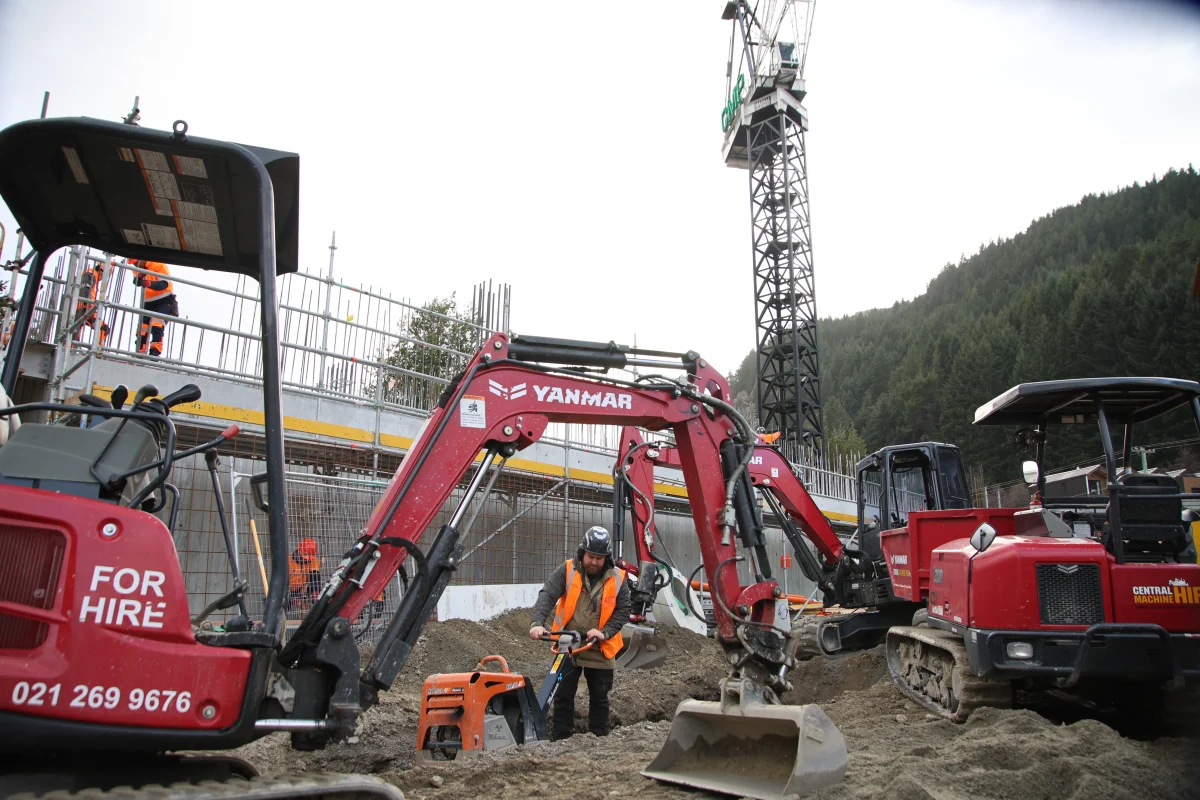
“Vibratory rollers or excavators, piling rigs or those sorts of things can trigger it,” Abishek says. “Those are the things we generally have a lookout for and turn down to suit.”
In practice, that can mean switching a roller from vibratory to static mode, resequencing work away from a sensitive boundary, or holding a noisy activity until later in the day, decisions made while the work is underway rather than after a complaint arrives.
Adroit General Manager Guy Macpherson says that ability to see what is happening in real time allows the site team to be proactive rather than simply recording an issue after it occurs.
“If you’re looking at your noise and it’s going to come in higher than it needs to be, you can look at what you can do to mitigate this on site, or talk with the council or neighbours around how you can move through it and still be successful in your construction project,” he says.
That turns monitoring into an active control rather than simply a record of an exceedance.
If you’re looking at your noise and it’s going to come in higher than it needs to be, you can look at what you can do to mitigate this on site.
Site-Specific Data for Site-Specific Decisions
CMP’s experience with Adroit extends beyond noise and vibration into weather monitoring, where Moore sees another practical application for site-specific data, and one with direct commercial consequences.
Wind is an obvious constraint on vertical construction. When wind speeds exceed a crane’s operating limits, lifting stops. That can have an immediate effect on productivity and programme, particularly where the crane sits on the critical path.
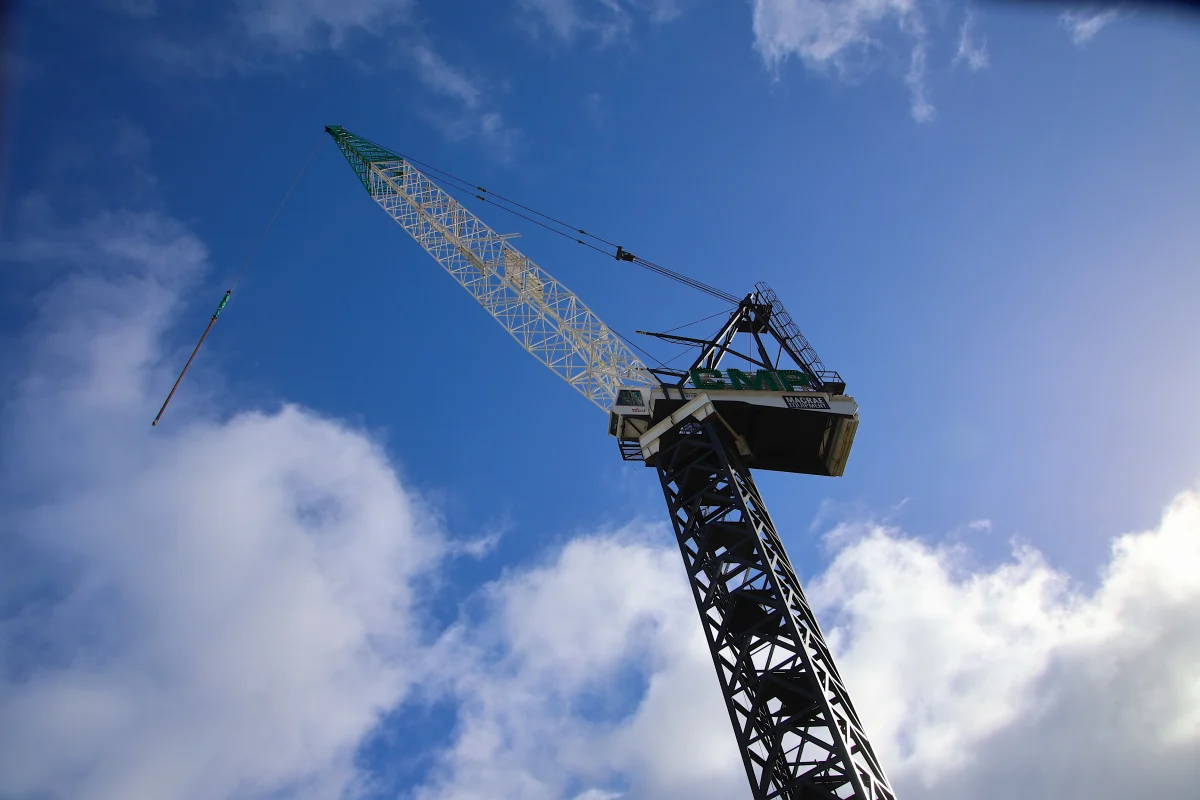
“Our cranes are very temperamental to wind,” Moore says. “If the wind exceeds the crane’s limits, we can’t lift products, and therefore the site comes to a grinding halt.”
The contractual consequences can be significant. Weather delays may form part of an extension-of-time claim, but the quality of the evidence matters. A reading from a regional weather station may not accurately represent conditions at the project itself, and gusts at jib height can be very different from conditions on the ground. A weather station mounted on the crane records the conditions where the lift actually happens.
Moore says monitoring conditions on site provides a much stronger factual basis.
“We can prove to a developer that it was too windy to work that day. Here’s the wind data: this is what level the crane is rated to. We’re therefore eligible for an extension of time because the contract lets us do that.”
That is materially different from relying on information collected kilometres away.
“Rather than using data from the airport, which might be in a totally different area from where the crane is located, it’s more site relevant.”
Macpherson says the distinction matters because a crane’s own wind unit serves a single purpose.

“The anemometer in a crane tells the operator whether it’s safe to lift at that moment, and that’s all it does. It doesn’t record anything,” he says.
“Our weather stations capture the same conditions as a permanent record. So the wind data that stopped a lift on Tuesday can be used to support an extension-of-time claim months later. The crane’s unit protects the lift; but ours protects the programme.”
CMP has also trialled rainfall monitoring for similar reasons. A direct record of rainfall at the site supports weather-related claims, and it is also relevant evidence for erosion and sediment control conditions, which on major earthworks can be as demanding as any noise limit.
The principle is simple. If a decision, delay or compliance question relates to conditions at a particular construction site, data collected at that site provides more relevant evidence.
Evidence When It Matters
The same data becomes particularly valuable when there is a question about what actually occurred.
Noise complaints are a good example. Construction sites operate alongside businesses, homes, roads and other sources of background noise. When a complaint is made, separating perception from the actual source and level of noise can otherwise be difficult.
Moore says continuous monitoring gives CMP objective evidence to work from.
“We often get complaints from neighbours that we’re working too early in the morning or too late at night, but we can quite easily prove that’s not the case if we have noise sensors on site,” he says.

“We’ve had instances where the council has come to site and we’ve been able to show quite clearly that the background traffic noise was actually louder than any construction noise we had on that site.”
For Moore, the value of that evidence is its objectivity.
“It’s quite handy having electronic data and it’s very hard to disprove. We’ve found those statistics really helpful over the last number of years.”
Macpherson says objective measurement is particularly important with noise because people’s perception of it can differ considerably.
“Noise is subjective. What is noisy to someone else may not actually be a non-compliant site,” he says.
“Because the data may be relied on, measurements are taken with calibrated, appropriately classed instruments, so the record stands up to scrutiny.”
Attributing noise to its source is where CMP’s other site technology comes in. CMP uses the Timescapes system of cameras and visual reporting on its sites, and Macpherson sees the two data sources working together: when a noise event is recorded, the camera feed can help identify what was happening on site at that moment.
“This is part of those integrated data sets, when you’re starting to use environmental monitoring feeds alongside camera feeds to have a better understanding of your construction site,” he says.
“If anything is raised against us or anything is brought up, we can go back and see what was happening and action it accordingly,” Abishek says.
That record provides value in both directions. It can demonstrate that CMP was operating within its consent conditions, but it can also identify when activity needs to change.
We’ve been able to show quite clearly that the background traffic noise was actually louder than any construction noise we had on that site.
From Portable Monitoring to Connected Fixed Stations
For major projects such as those CMP is completing in Queenstown, flexibility is important. The areas of greatest activity and environmental risk change as construction progresses, and CMP’s use of Adroit reflects that, with both portable and fixed monitoring configurations deployed according to the requirements and stage of each project.

The workhorse of that flexibility is Adroit’s Portable Monitoring Kit, the PMK. Each unit is rugged, self-contained and connects directly to the Adroit Platform over Spark’s IoT network, with no permanent installation or technician required. Switch it on and it is live, streaming data to the dashboard within minutes. Kits can be configured for noise, vibration or dust, and while dust monitoring is not required on CMP’s Queenstown sites, the PMK-Dust variant is already widely used on quarries and civil projects around New Zealand. When the work moves, the kit moves with it.
Abishek says the practicality of the Adroit’s PMK has been one of its strengths.
“This is the first time we’ve looked at such equipment and it’s been straightforward in terms of how we can use it,” he says.
“On a daily basis, we just take it out of the box and hook it to the place we want data from. It’s been great. It’s been user-friendly.”
This is the first time we’ve looked at such equipment and it’s been straightforward in terms of how we can use it.

On a large site, being able to move the monitoring point is particularly useful.
“At whichever corner we want it, we can just move it and take data,” he says.
For longer-term monitoring, Adroit provides fixed stations configured around the requirements of the project. At one of CMP’s Queenstown sites, a fixed installation is mounted on a post secured to a client-provided deadman block. The post carries the monitoring equipment, noise boom, weather station and rain gauge, with the vibration sensor connected directly to the deadman block so that readings reflect vibration actually transmitted through the ground rather than movement of the mounting post.
Keeping Stakeholders Informed
Everything the sensors capture comes together in the Adroit Platform, where data from across the site is visualised in real-time. Project teams can view live readings and historical records on a single dashboard, set custom thresholds for each sensor and location, and direct alerts to the people who actually need to respond.
Moore says authorised CMP personnel can access project information and historical records when required.
“Anyone can log on. If your name’s registered for that site, you’ll get the alerts. If I wanted access to that information or wanted to look back at something historically, I’ve got the ability to do so,” he says.
Anyone can log on. If your name’s registered for that site, you’ll get the alerts.

The result is an end-to-end system: environmental conditions are measured on site, transmitted through Spark’s IoT network and made available to the people responsible for managing the project.
For Macpherson, the principle is straightforward: “Doing things smarter, not harder.”
A consent breach can stop work. Excessive noise or vibration can affect neighbours. High winds can stop crane operations. Complaints need to be investigated. Clients and regulators may require evidence of what happened. Each has a different consequence, but all benefit from better information.
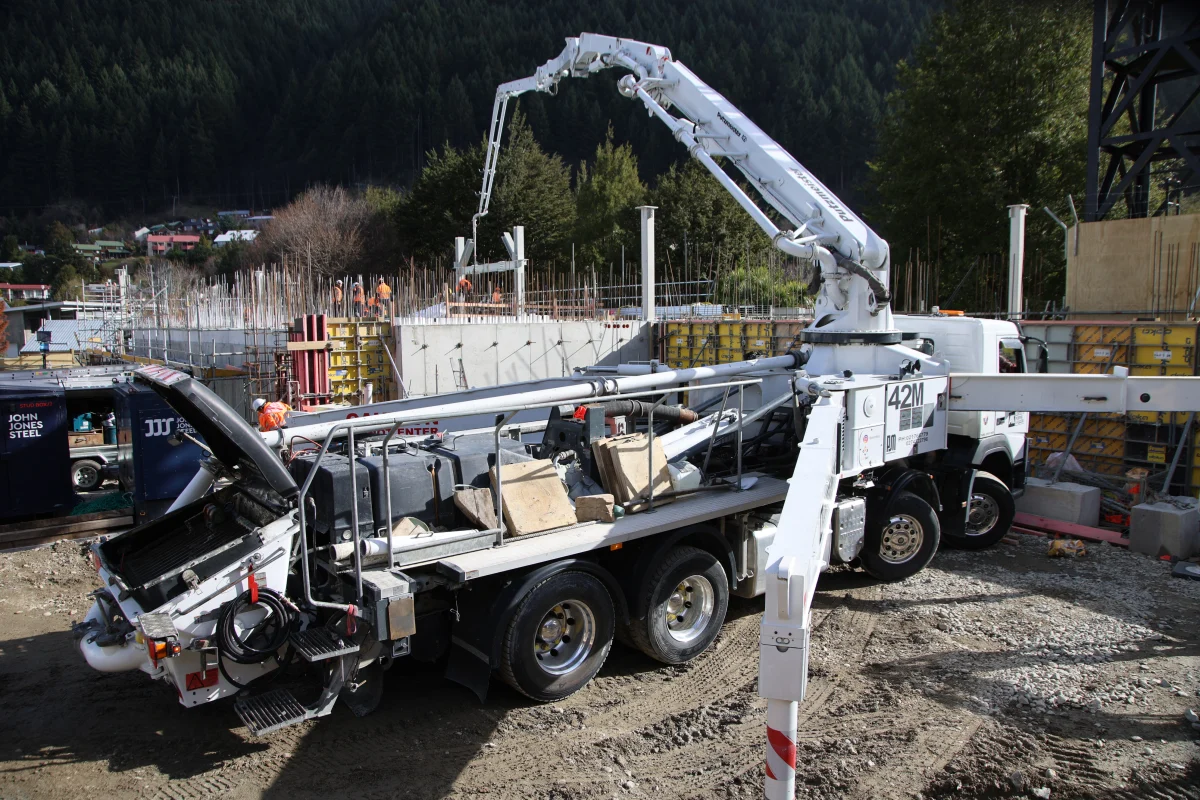
Abishek says monitoring is becoming increasingly important as contractors work around more stakeholders and under tighter programmes.
“Those controls definitely need to be managed and maintained properly in order to run construction successfully. If we receive a breach, that’s going to stop construction, which we don’t want,” he says.
“We’re on a strict programme, so we definitely need to have this as a control in order to successfully deliver the project.”
For Adroit, CMP’s experience demonstrates an evolution in environmental monitoring. Compliance remains fundamental, but the same infrastructure now warns teams before limits are reached, resolves complaints with objective evidence, supports contractual claims with site-specific weather records, and, with the PMK, moves with the work as projects progress.
For Abishek, the outcome is much simpler.
“It helps us a lot and it keeps our neighbours happy as well,” he says.
“So yeah, we can keep building.”
To find out how Adroit’s environmental monitoring solutions can support your next project, visit: